Es gibt keine Website-Inhalte zu Ihrer Suchanfrage.
Website-Inhalte
Sie haben sich erfolgreich abgemeldet.


Nosokomiale Infektionen
Das Risiko für das Auftreten von nosokomialen Infektionen unterscheidet sich je nach den medizinischen Maßnahmen und zugrundliegenden Erkrankungen.
Es gibt nur wenige Daten im Vergleich zur Humanmedizin über NI/HAI im Veterinärbereich. Eine Untersuchung zeigte, dass 19 % der Hunde und Pferde und 16% der Katzen mindestens eine NI/HAI während des stationären Aufenthaltes entwickeln. Dabei fanden sich deutliche Unterschiede (8-36 %) in den verschiedenen Kliniken.1, 2
In einem Überwachungszeitraum von 5 Jahren kam es in verschiedenen Tierkliniken zu mindestens einem nosokomialen Ausbruch.3, 4 45 % der Kliniken meldeten sogar mehrere Ausbrüche in diesem Zeitraum. Viele dieser Ausbrüche erforderten eine eingeschränkte Aufnahme von Patienten (58 %) oder die Schließung der Tierklinik bzw. einzelner Abteilungen (32 %).4
Die Folgen von NI/HAI sind verlängerte stationäre Unterbringung sowie weitere und intensivere Behandlungen und bedeuten zumeist höhere Kosten für die Patientenbesitzer und die Tierkliniken- und Praxen. NI können dauerhafte gesundheitliche Folgen für die Patienten mit sich bringen und sogar zum Tod des Tieres führen.1
Multiresistente Erreger (MREs) sind häufig an NI/HAI beteiligt, was die Behandlung erschwert. Darüber hinaus können sich einige krankenhausassoziierte Erreger (z. B. Methicillin-resistenter Staphylococcus aureus [MRSA] auf das Personal oder die Tierbesitzer übertragen und zu Erkrankungen beim Menschen führen.5-8
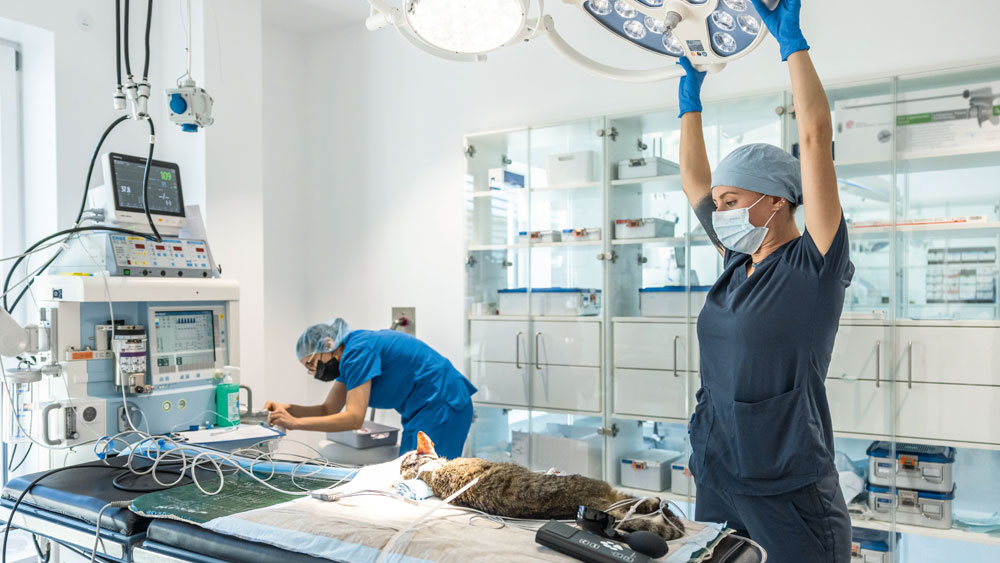
Durch die rasante Entwicklung in der Tiermedizin, vor allem in der Intensivmedizin und Chirurgie, gewinnen die NI/HAI immer mehr an Bedeutung und beeinflussen maßgeblich den Erfolg der Behandlung. In der Humanmedizin wird davon ausgegangen, dass sich 10 bis 70 % aller nosokomialen Infektion durch einfache und leicht umsetzbare Maßnahmen zur Infektionsprävention vermeiden lassen.9
Der Anteil der vermeidbaren Infektionen in der Veterinärmedizin ist nicht bekannt, dürfte aber ähnlich hoch oder sogar höher sein, da eine flächendeckende Infektionskontrolle in der tierärztlichen Praxis noch kein Standard ist. Dies stellt sowohl für Tiere als auch für Menschen ein Risiko dar. Nosokomiale Ausbrüche aufgrund von Methicillin-resistentem Staphylococcus pseudintermedius10 und felinem Calicivirus3sind allgemein bekannt.
Krankheitserreger wie Salmonella spp.4, 11 oder S. aureus sind ebenso mit nosokomialen Ausbrüchen in Verbindung gebracht worden und stellen ein zoonotisches Risiko für Personal und Patientenbesitzer dar.4, 12
Eine Verringerung der Infektionsraten geht also nicht nur mit einem besseren Outcome der Patienten, geringeren Kosten, zufriedeneren Kunden und weniger Stress (emotional wie auch rational) für das tiermedizinische Personal einher, sondern ist auch ein wichtiger Aspekt beim Thema Arbeitsschutz und Arbeitssicherheit. Vor allem da eine Reduktion der NI/HAI durch einfache basis- und prozesshygienische Maßnahmen erreicht werden können. 2002, als die CDC Guidelines für die Händehygiene in der Humanmedizin herausgegeben wurden, lag die Händehygienecompliance in der Humanmedizin bei 40 % (5-81 %). Pittet und Kollegen (2000) zeigten in ihrer Arbeit, dass eine Verbesserung der Handhygiene-Compliance von 48 % auf 66 % mit einer signifikanten Reduktion der nosokomialen Infektionen einher geht (Prävalenz von 16,9 % im Jahr 1994 auf 9,9 % im Jahr 1998; p=0,04), sowie einer signifikanten Reduktion der Übertragungsrate von multiresistenten S. aureus.13
Zugehörige Information
Zoonosen und multiresistente Erreger
Mehr erfahren


